272 stories
·
1 follower

The AI-Assisted Linux Driver for DisplayLink Gets Legal Notice

1 Share
synaptics vino legal notice-themed banner

Before we dive into the matter, you first have to understand what DisplayLink is. It is a proprietary graphics transport technology that lets computers connect to one or more external displays over USB, using docks or adapters built around DisplayLink chips.

It works by compressing display data on the host computer and sending it to a chip in the connected device. The chip then decodes it for output to monitors through interfaces such as HDMI or DisplayPort.

On Linux, this support can rub some people the wrong way due to its closed-source nature. That is where Mike Lothian's (FireBurn) Vino comes in as an open alternative.

Unfortunately, Synaptics owns DisplayLink and has sent Mike cease-and-desist letters alleging that he infringed its DisplayLink patents with his project.

What's Vino?

vino github repo error 404

Vino is a driver that lets the Linux kernel talk to DisplayLink docks directly. It is meant to replace DisplayLink's closed-source software and the open source EVDI kernel module that sits beside it.

Mike wrote it with help from Claude Code, and the first version reached the kernel mailing list in June, unfinished. He had faced a communication issue between the dock and the driver and asked other developers for help.

In early July (courtesy of LWN.net), he emailed a Synaptics employee for guidance and mentioned his Rust rewrite of EVDI. About two weeks later, a different employee replied.

That reply said his Rust rewrite of EVDI was not a thing of concern. Rather, the concern was the DisplayLink protocol and codec, which Synaptics believes are covered by its patents.

Lawyers get involved

A cease-and-desist letter followed on August 17. It told Mike to stop development and withdraw anything he had submitted to maintainers and hosting sites, with a signed confirmation due by August 28.

An appendix listed over 125 patents without saying which applied. Mike posted a working version 3 of Vino on August 26 and asked Synaptics the next day which claims they had in mind.

The answer came in October as claim charts. They map one claim from each of two patents, GB2484736 and GB2485613, to his source code.

The October 5 letter said Synaptics would seek $25,000 for the cost of preparing those charts if Mike missed an October 11 deadline, with the figure rising by at least $25,000 each week.

Mike replied on October 6 (message 8) with an offer to pause public work on the encoding code the charts point to if Synaptics paused the deadline and the weekly charge. He also asked about licensing that code for non-commercial use.

On October 7, Synaptics said it would grant no patent license or promise not to sue and set October 18 as a final deadline.

💭
What I can see so far is a very aggressive patent infringement witch hunt against a lone open source developer who was quite open to communication.

Synaptics took about three weeks to answer his request for specifics, then followed with a potentially life-ruining $25,000 demand that compounds weekly.

Clean room design quirks

Mike describes Vino as a clean-room driver and says he reverse engineered it from captured USB traffic and vendor programs.

If you didn't know, in a clean-room recreation, one party studies the original implementation, then writes a description, and a separate party builds the new code from that description alone.

It is meant to act as a defense against copyright claims because it shows nothing was copied. Synaptics’ July reply argues that clean-room or independently written code can still infringe a patent. 🤷

The timing

Vino also lands in a busy stretch for AI-assisted reverse engineering, from smart TV cleanups to office suite clones. Legal pressure has reached other AI-built projects too.

Mike has already taken down the Vino repository in response to the demands, and Synaptics has not made a public statement so far.

Only time will tell what happens to the work, and I hope someone forked it before it went offline, as that would give others a good starting point to build on.

Read the whole story
jhunorss
16 hours ago
reply
Share this story
Delete

I Tried The Weird New Mini Window Feature in Firefox 160

1 Share
firefox mini window banner

Mozilla has been experimenting a lot with Firefox lately, and a good chunk of that effort has gone into AI. The sidebar can house a chatbot of your choice, and Smart Window has an assistant that lets you pick the AI model.

Luckily, they have stopped tunnel-visioning into AI, and the UX side of the browser has seen some big upgrades.

Containers keep work, shopping, and personal browsing separate; Split View shows two pages side by side in one window; and Vertical Tabs move your tab list into the sidebar.

I believe that these upgrades have made Firefox a much more compelling option when compared to other popular web browsers.

Of course they are not stopping there. Mini Window is the latest addition to that list, which builds on the work done in Picture-in-Picture, the floating video player.

🚧
This feature is still being developed. Don't rely on it for any important browsing sessions.

Firefox Mini Window

Using Mini Window on Linux with Firefox 160 feels like a beta from the start. It needs a regular browser window with a tab open to work because a standalone mini window is not possible yet.

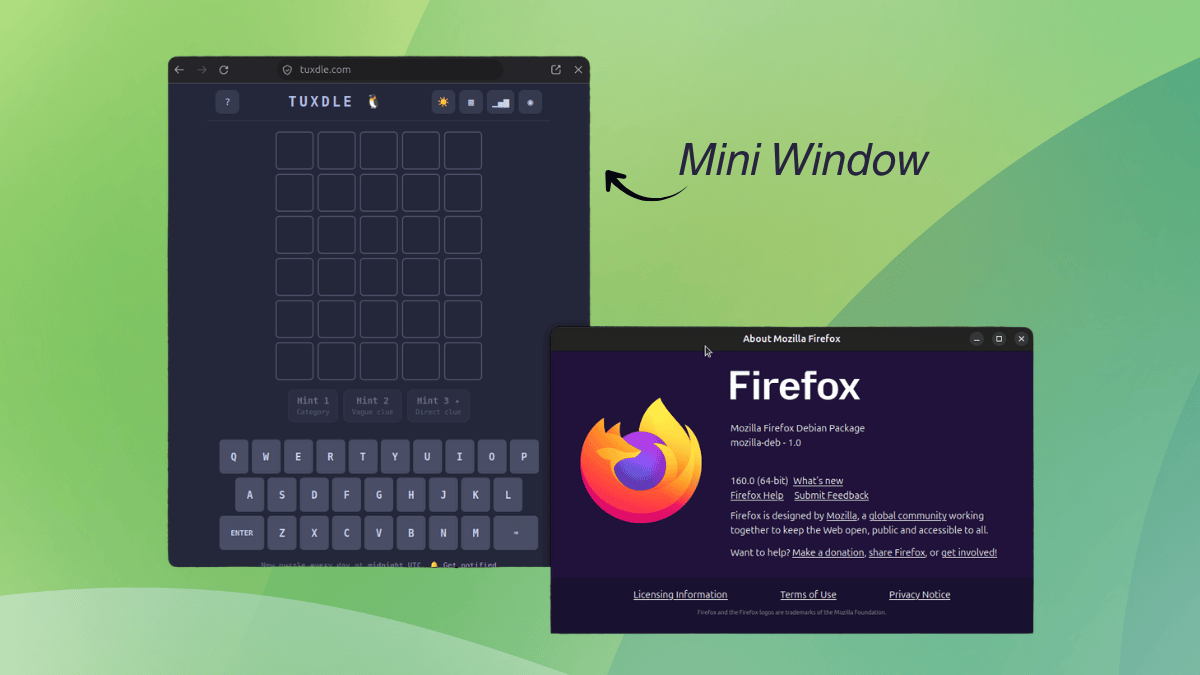
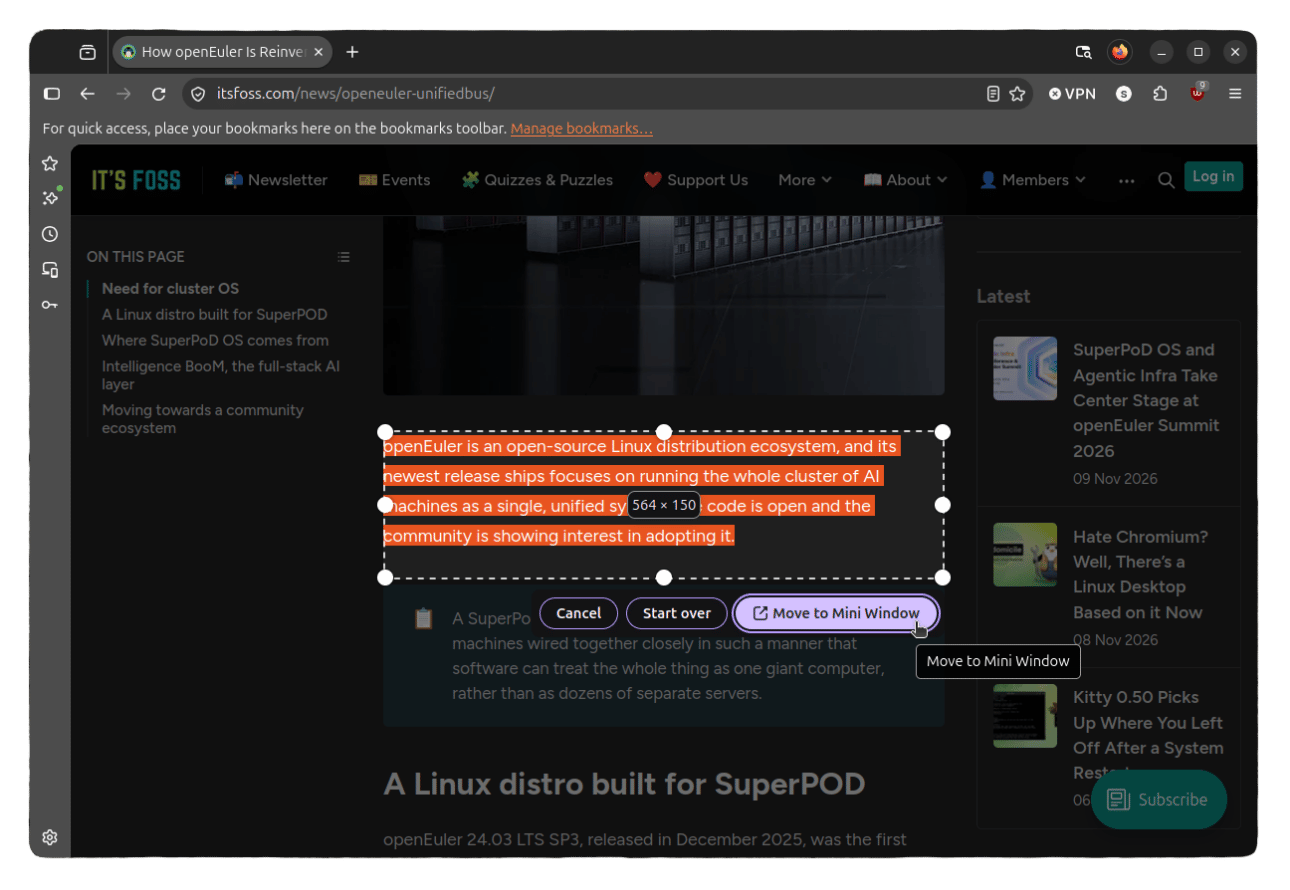
It comes in two modes. Move full tab sends the whole page into a small window that floats above your other windows, and Move selection lets you draw a box around the part of a page you want and sends only that.

Either way, the moved tab is not available in the main window until you send it back.

A full tab mini window looks like a tiny browser window. The top bar has the page address along with reload, back, forward, send back, and close buttons. Pages adapt to the smaller size as well.

During testing, websites like ours, Wikipedia, and Associated Press were successfully switching to their compact layout.

A selection mini window is more compact and shows just the chosen area under the page address, with a reload button and the same close and send back buttons.

Both kinds can be dragged around and resized. Selection mini windows have some rough edges because they can appear too small and refuse to resize well.

They are still handy for research sessions where you need to check small bits of information without opening more tabs and cluttering the desktop.

Try it Out

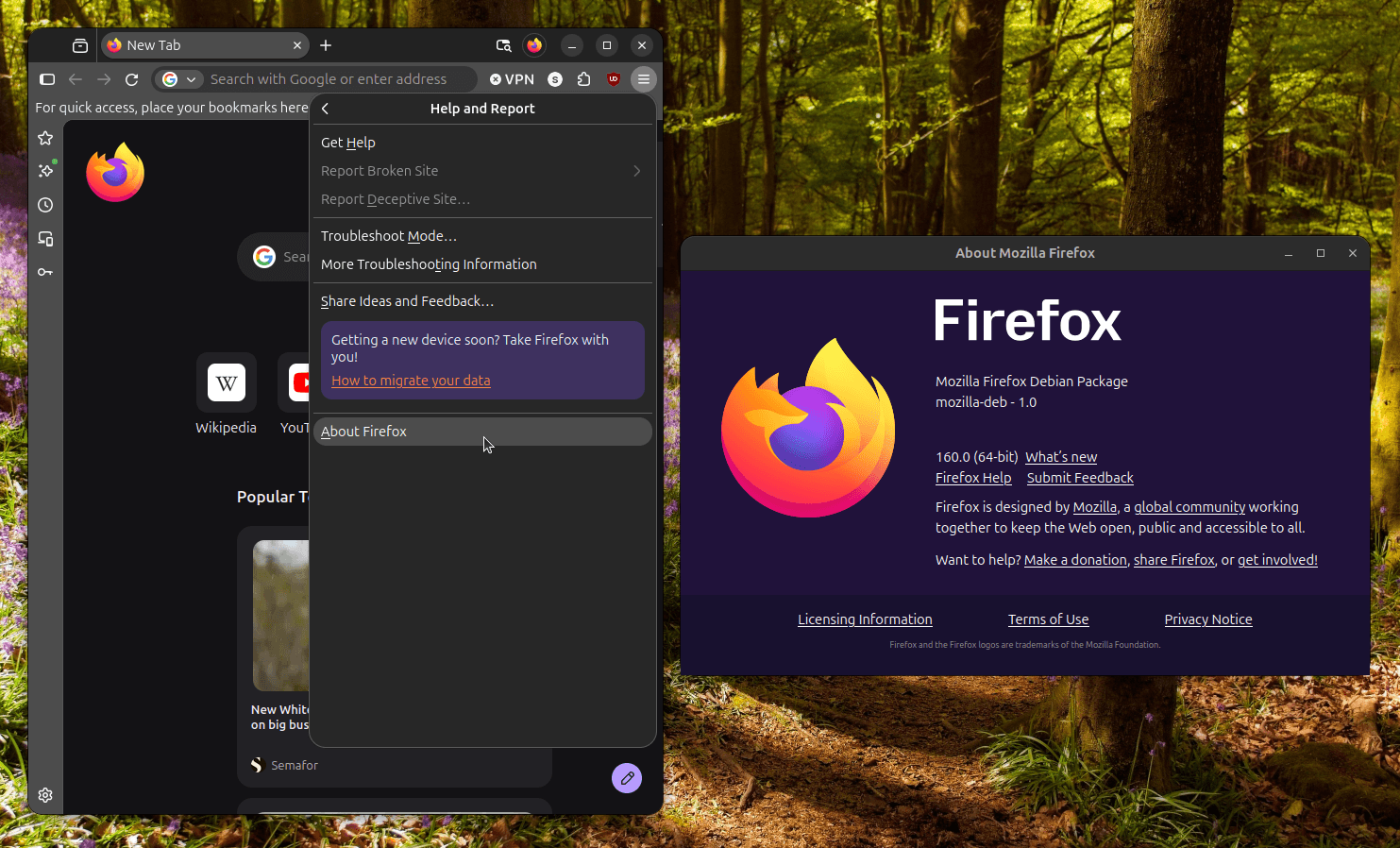
firefox about page

Before you get started using Mini Window, you first have to ensure that you are on Firefox 160 or later. To do that, go into the hamburger menu and open "Help and Report." Here, click on "About Firefox" and take note of the version shown in the dialog that opens up.

If you find that an older build of Firefox is installed, then get the latest release from the official website or the official FTP mirror.

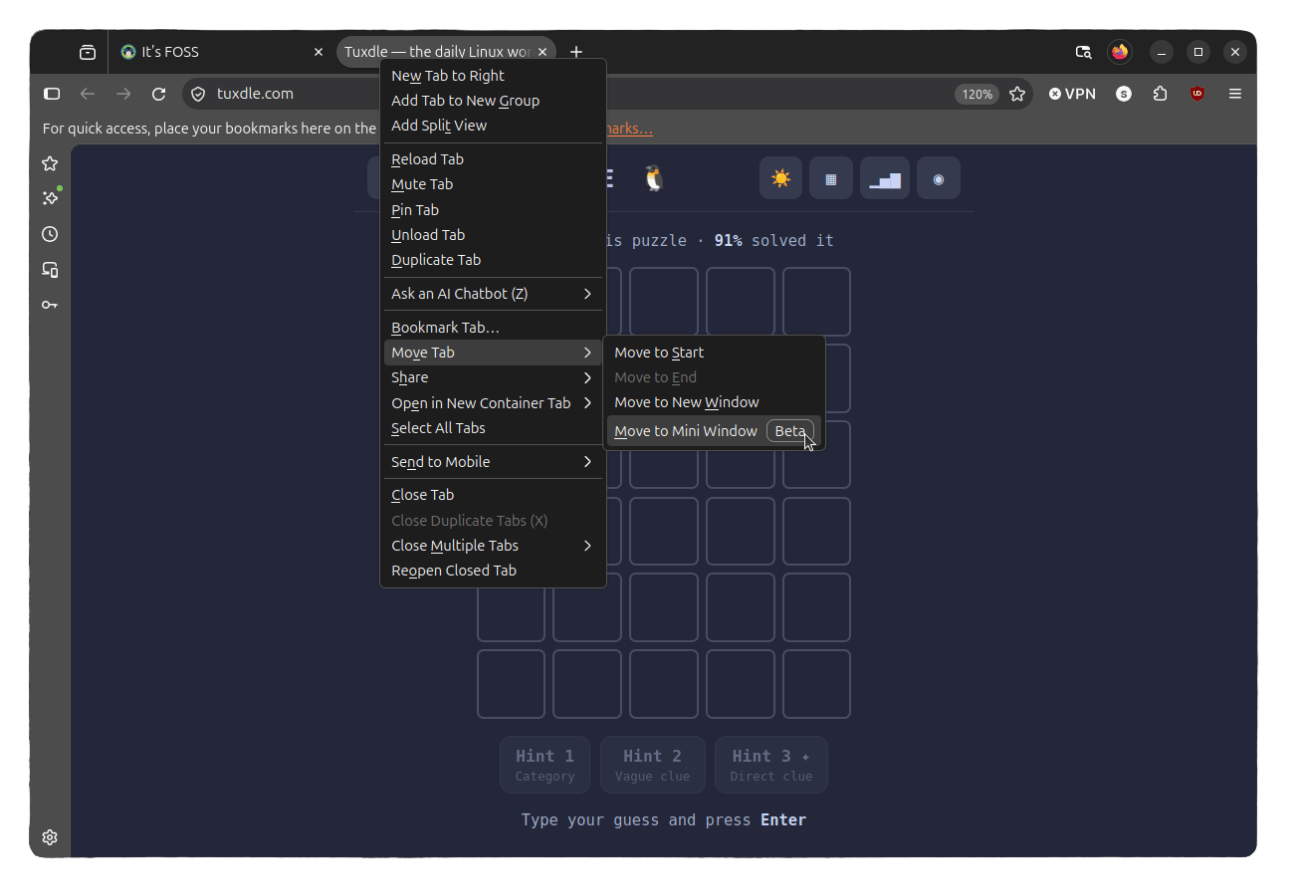
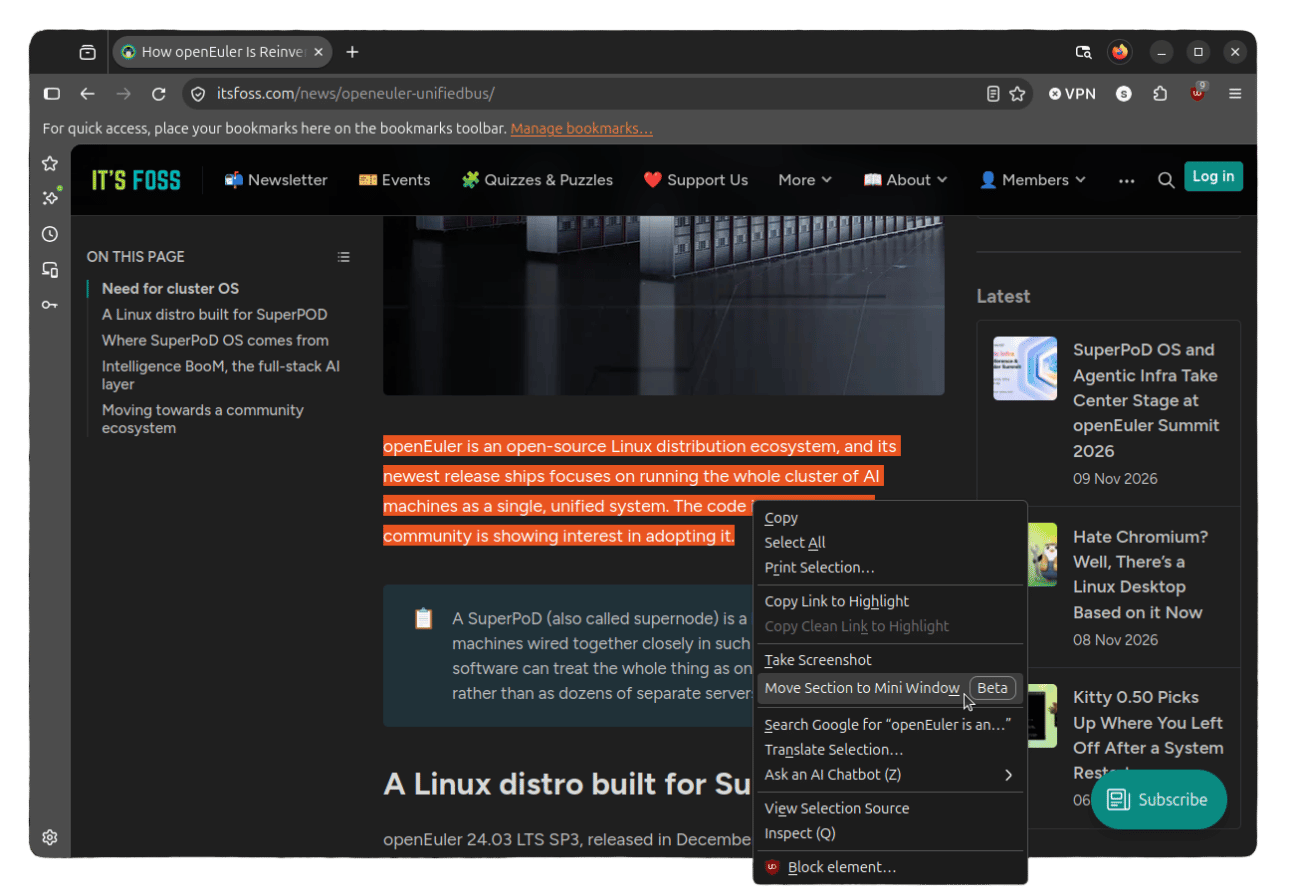
Next, you just have to start a normal browsing session with multiple tabs and follow any one of these three approaches to get started:

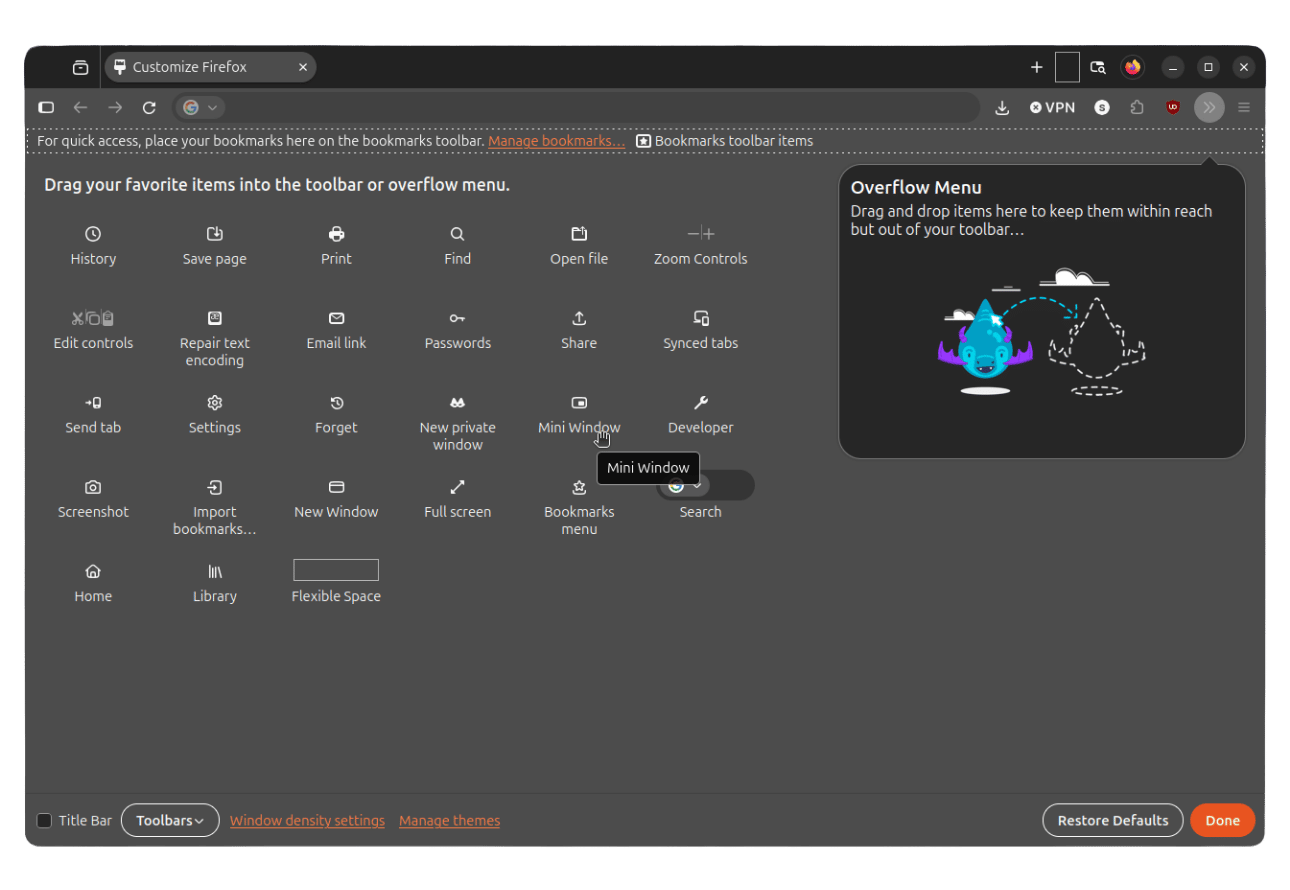
  • Add the Mini Window icon to the toolbar.
  • Right-click a tab and go into "Move Tab."
  • Right-click the page content and choose Move Section to "Mini Window."

For the toolbar method, right-click the toolbar and open "Customize Toolbar." Find the Mini Window icon in the list and drag it onto the toolbar, then hit "Done." After that, the feature is just one click away on any page.


Suggested Read 📖: Firefox can do a lot more than you realize. Here are 21 features most people overlook.

Read the whole story
jhunorss
16 hours ago
reply
Share this story
Delete

Tech stocks crash — and so do data center loans

1 Share

The AI market works on bubble economics. It’s about stories and magic! Making financial sense, that’s for the old people now! Get with the program, granddad!

But magic doesn’t happen. And it never happens with money.

We know you all just want this thing to crash. Every time the Nasdaq hiccups, will this pass in a few days? Or … is this it?

After the Democrats swept the US elections on Tuesday, the market went up a bit on Wednesday. But on Thursday stocks crashed hard, with big losses in the S&P, Dow, and Nasdaq. Large holders were dumping their tech stocks specifically — anything that touched AI. [Bloomberg, archive]

There was some recovery this morning, after a good jobs report — and some traders deciding this wasn’t the big one and they could buy the dip. Cross fingers.

The finance papers blame the crash on the threat that the incoming Democrats might regulate AI in any manner whatsoever and pull back on data center builds. Oh no! [FT, archive]

One US portfolio manager called the Democrat win “a horrible day for America.” He happens to hold a lot of Anthropic. [FT, archive]

But the political pushback was coming. Data centers were the issue in the election. The AI and crypto lobby groups — who are largely the same actual guys — blew almost all the $250 million they poured in. [Molly White]

Banks and financiers don’t think data center loans are such a great bet anymore. CoreWeave bonds have now topped 16% yield. CoreWeave raised debt earlier in 2026 at 9%. You can’t build new data centers on 16% interest. [CNBC]

Goldman Sachs and Apollo led SpaceX’s recent $40 billion bond offer to send Nvidia chips to space — and now they’re frantically trying to sell the debt off earlier than planned. This deal was written so SpaceX could not claim force majeure to pause payments — the way Oracle did in September. [Bloomberg]

Rumors were circulating on Thursday that someone was dumping $500 million of data center loans. That turned out to be Dutch bank ING, which has put the loans up for auction — including a $25 million slice of OpenAI’s Stargate site in New Mexico, plus debt tied to big operators Vantage and CyrusOne. [Bloomberg, archive]

The Bank of England is looking into loans for UK data center projects that don’t have an actual tenant lined up. These are the hot prospects for defaulting. As Kat Jones of APRS told us in October, UK hyperscale data center plans are mostly not coming from tech companies, but from local real estate speculators who don’t have a tenant lined up. [Bloomberg, archive]

The European Central Bank is thinking about reviewing banks’ loans for data centers. [Bloomberg,]

At the Financial Times Future of AI Summit, the AI vendors were shocked that nobody likes them. They don’t really understand the objections — one CEO compared data center protestors to protests against masks for COVID. [FT, archive]

The market crash makes the big IPOs look less likely. Greg Brockman of OpenAI is already talking up 2027 for their IPO. Anthropic’s investors are suggesting the company reduce their IPO valuation to just (just!) $1 trillion — when it was originally slated to be $2 trillion, then $1.5 trillion. Anthropic still wants to get the IPO out the door this month. Good luck! [Reuters; WSJ]

US and world markets are still hugely dependent on AI stocks and debt. Pension funds and hedge funds are highly exposed — because they only looked at the number going up, and they were careful never to ask tricky questions like: was there any substance to the number, or if was it just a hot air balloon? But if AI crashes, everything crashes. [Bloomberg, archive]

FT Alphaville asks the obvious question about data centers: [Substack]

Shouldn’t efficient markets have already priced in these states’ critical shortage of electricity capacity, along with the somewhat sketchy evidence that data farms were ever being built in the numbers promised?

But that makes the mistake of assuming any of these people think further ahead than lunchtime.

Read the whole story
jhunorss
16 hours ago
reply
Share this story
Delete

The Ethereum Foundation is officially a corporate suicide cult

1 Share

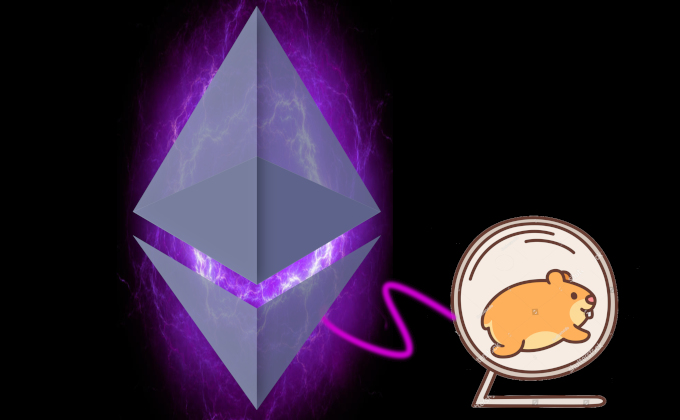
Ethereum is the normal business-like crypto, right? Not like those bitcoin weirdos. Approximately 100% of holders are in it for the money. Fine.

The Ethereum Foundation is the non-profit that runs the Ethereum blockchain and its crypto, which is called ether. The Foundation is a little bit weirder. Like that time they demanded all staff sign a suicide pledge and threatened to fire anyone who didn’t sign. You might think it was a bit of a cult.


In March, the Foundation published “The Ethereum Foundation Mandate.” The document set the governance of Ethereum for the next one thousand years! [Ethereum Foundation, PDF, archive]

The 38-page mandate is full of cheerful anime characters wandering psychedelic landscapes. The text is about how much we need extreme anarcho-capitalist self-sovereign identity for all the people of the world! Or at least the ones who bought some ether.

Page 11 includes the “Source Seppuku License,” which demands signers take their own life with a sword if they fail to keep the code open:

To take his or her own life with a sword upon failure to uphold any of the pledges in this license, or upon modification or removal of any part of this license.

May the Foundation fall on its own sword if it fails to uphold our solemn promise to Ethereum.


The Seppuku License is written in Comic Sans and it’s decorated with a cartoon of an anime girl and some anime cats. Cute! The original version, which was sent to employees in February, had the Seppuku License in plain text, and it ended with the employee having to declare: [archive, PDF]

May we ritualistically fall on our own swords if we fail to uphold our solemn promise to Ethereum and the Infinite Garden.

This isn’t idle crypto weirdo edgelord talk. This is in a document that employees were required to agree to — or quit their job.

Several dozen employees refused to sign but also refused to resign. The two employees behind the rebellion were fired. One of them, Kayleen Fulton, is now suing the Ethereum Foundation, naming two of its board members, Vitalik Buterin and Bastian Aue, in her complaint. [Complaint, PDF; case docket]

Buterin is the main founder of Ethereum and Aue is a co-executive director of the Foundation. From the complaint:

This is a case about an organization that fired a cancer patient thirteen days after she told its leadership, in writing, that she had cancer, and twelve days after she organized a respectful written objection, signed by half of her department, to a document that its board had ordered every employee to personally affirm under threat of termination. That document contained a suicide pledge, in the organization’s own words, “to take his or her own life with a sword.”

Ethereum Foundation employees widely objected to the mandate from the get-go. When an early version was sent around in February, nearly 80 of the foundation’s 250 or so employees wanted the seppuku bit removed:

One employee asked management in writing whether signing meant he was required to commit suicide. Another cited a colleague the Foundation had lost to suicide the year before.

Buterin assured staff the mandate was “continuing to be worked on with significant changes especially to the areas where people have expressed the most concern or confusion.”

On 13 March, the board published the final version. The “significant changes” were the slight text amendment and that the suicide pledge was put into an illustration instead of being in searchable text.

The Foundation then inscribed the full document permanently on the Ethereum blockchain, as transaction calldata, because they’re definitely not a cult.

Buterin defended keeping the Seppuku License intact: “we feel that being inoffensive in that sense is not the energy we need right now.”

So this is terrible. How can we make it worse? Let’s add Nazis! The visual styling for the manifesto, with the anime girls, was taken directly from the Milady Project, an NFT project:

The “milady alignment” Mr. Beiko referred to is the Mandate’s visual styling, which is built throughout around imagery from “Milady Maker,” an NFT project whose founder was publicly exposed in 2022 for operating accounts that promoted extreme, white-nationalist ideology and disturbing pro-anorexia content. Those controversies and messaging were widely known within the Ethereum developer community when the Mandate was published. Board members adopted Milady profile images, impliedly embracing such messaging.

The Milady Project really were just neo-Nazis. As well as putting Nazi phrases on the NFTs, they posted about exterminating Jews and compared black people to gorillas. These are the people the Ethereum Foundation board thought were just the ticket for their official corporate design. [Defiant, archive]

Buterin endorsed the Milady styling purely for the sake of controversy:

Employees objected to the imagery as well. Board member and Co-Executive Director Hsiao-Wei Wang wrote that she “did not support applying the Milady aesthetic to a 1000-year vision mandate.” Mr. Buterin’s answer was that “the controversialness of those aesthetics is itself part of the point.”

That Milady were straight-up Nazis is sure controversial. You could use that word.

The final version of the manifesto went around in March. On 20 March, Bastian Aue messaged all employees telling them to sign the manifesto or else. Suicide pledge and all. If they refused to sign, the Foundation would take this as resigning. [Exhibit 5, PDF]

You can’t just tell employees that not accepting arbitrary new conditions constitutes resigning. That’s not a thing. Fulton and her colleague Trent Van Epps organised an employee letter against this mandate to sign a pledge of suicide.

Fifty-three people signed the letter. They kept their jobs for the moment — but Fulton and Van Epps were fired on 6 April. Aue didn’t tell them why. By September 2026, most of the other 53 had resigned or been fired.

Fulton was diagnosed with cancer in March, around the time of the mandate signing demand. She notified the company of her cancer, and soon after of her chemotherapy schedule. She was told that Bastian Aue wanted to fire her over this specifically:

Mr. Aue concluded that an employee about to begin cancer treatment could not provide the “exclusive and energetic focus” the Foundation was demanding of every employee, and that retaining her, with the time away from work and adjustments her treatment would require, was inconsistent with the “right mix of people” he intended to assemble.

Fulton claims discrimination against a protected disability and illegal retaliation against workplace collective action.

So far the claim has just been filed, and it looks like one of substance. The likely outcome of a reasonably solid workplace discrimination claim from a lawyered-up plaintiff with resources is a negotiation and a settlement.

But also, how stupid do you have to be? Why would you create an insane manifesto and then insist on making your staff sign it? Why would you think retaliation against protected actions was a good idea? Why would you tell someone in your organization how you fired an employee for getting chemotherapy? All of this against an employee who has the crypto stash to fight back?

Ancap. It’s a hell of a drug.


Become a Patron!

Your subscriptions keep this site going. Sign up today!

Read the whole story
jhunorss
19 hours ago
reply
Share this story
Delete

Wie werden Rechenzentren gekühlt?

1 Share

Wie kühlt man ein Rechenzentrum? Vorne Wasser rein, hinten Dampf raus? Und wenn da schon so viel Wärme anfällt, warum heizt man damit keine Häuser? Die Frage kam auf Mastodon. Hier ist der Thread.

Es gibt eine Reihe von Kühlsystemen. Welches man nimmt, hängt davon ab, wo das Rechenzentrum steht und wie viel Wärme auf engem Raum anfällt. Fangen wir mit dem günstigsten Fall an.

Kühlen mit Außenluft

Ein ehemaliges Facebook-Rack. Die Person im Vordergrund hält eines der Compute-Module in der Hand.

Das ist ein Ex-Facebook-Rack aus dem Open Compute Project. Pre-AI-Technik. Die Person im Vordergrund hält ein Compute-Modul in der Hand. Das Ding ist ein Drittel Rack breit und zwei Höheneinheiten hoch. Zwanzig Reihen mit je drei Modulen passen ins Rack.

Das Rack steht frei in der Halle. Draußen kommt Luft rein, sie geht durch die Rechner und warm wieder raus. Die Rechner sind dafür gebaut. Wenn das Klima mitspielt und die Ansaugluft meist unter 30 °C bleibt, kommt man an vielen Tagen ohne Kältemaschine aus. An sehr heißen Tagen muss man der Außenluft gegebenenfalls nachhelfen. Facebook meldete für sein frühes Open-Compute-Rechenzentrum in Prineville einen PUE von 1,07 bei Volllast.

Kaltgang und Warmgang

Leere Rechenzentrumshalle mit Klimageräten an den Wänden und einem Doppelboden.

In einem traditionellen RZ stehen die Klimageräte an der Wand. Sie blasen kalte Luft unter den Doppelboden. Durch gelochte Bodenplatten kommt sie in den Kaltgang. Dort stehen die Racks mit den Vorderseiten zum Gang. Türen und ein Dach schließen ihn ab, darin herrscht leichter Überdruck.

Rackvorderseiten im Kaltgang. Die gelochten Bodenplatten lassen die kalte Luft einströmen.

Die kalte Luft soll durch die Geräte. Auf der anderen Seite, im Warmgang, blasen die Geräte sie wieder aus. Die Klimageräte saugen die warme Luft an, kühlen sie und blasen sie wieder unter den Boden.

Angelieferte Blade-Chassis. Ein Chassis ist zehn Höheneinheiten hoch und fasst zwei Reihen mit je acht kleinen Servern.

Vier Chassis machen hier ein Rack voll. Im Foto vom Kaltgang steckt in den vorderen Racks erst eines. Auf der Rückseite sieht man, wo die warme Luft rauskommt. Blau, Rot und Schwarz markieren die Stromkreise.

Rackrückseite mit farblich markierten Stromleitungen, Netzwerkkabeln und den Luftauslässen der Netzteile.

Für diese Art Anlage sind 14 bis 21 kW pro Rack eine Größenordnung. Will man bei gleicher Temperaturdifferenz mehr Wärme wegschaffen, muss mehr Luft durchs Rack. Irgendwann werden die nötigen Luftmengen und der Aufwand für die Lüfter unpraktisch.

Wie die Wärme nach draußen kommt

Die Luft im Kaltgang nimmt die Wärme an den Rechnern auf. Aus der Halle schafft sie ein Wasserkreislauf. Bei gleichem Volumen und gleicher Erwärmung nimmt Wasser mehrere tausendmal so viel Wärme auf wie Luft. Im Außenkreislauf kann Glykol im Wasser stecken, damit es im Winter nicht einfriert.

Rohrleitungen und Pumpen des Wasserkreislaufs im Rechenzentrum.

Dafür gibt es ganze Räume mit Rohrleitungen und Umwälzpumpen. Wenn die Außenluft für die nötige Kühlwassertemperatur zu warm ist, kann eine Kältemaschine mit Kompressor nachhelfen. Draußen stehen die Rückkühler. Die sehen aus wie dein CPU-Kühler, nur größer und mit fetteren Lüftern.

Rückkühler bei der Anlieferung.

Innenansicht eines Rückkühlers mit Kühlrippen.

Die Fotos zeigen das inzwischen stillgelegte Rechenzentrum von web.de in der Amalienbadstraße in Durlach. Ein RZ in den Rheingraben zu stellen, wo es heiß und feucht wird, ist nur untermittelschlau. Diese Rückkühler konnten bei Bedarf enthärtetes Wasser auf die Kühlrippen sprühen. Wenn die Luft trocken genug ist, verdunstet das Wasser und hilft beim Kühlen.

Und wie testet man die Kühlung, bevor die Rechner da sind? Mit großen Heizgeräten von Boels. Die Dinger nimmt man sonst auch zum Trocknen von Estrich. Für den Test sollen sie dasselbe tun wie die Rechner, nämlich Strom ziehen und die Halle warm machen.

Heizgeräte simulieren beim Burn-in die Wärmelast der späteren Server.

120 kW in einem Rack

Ein dicht gepacktes AI-Rack kann mehr als fünfmal so viel Wärme abgeben wie die 21-kW-Racks von eben. Die Chips müssen schnell miteinander reden. Dafür packt man viele davon dicht zusammen, und entsprechend viel Wärme fällt auf kleinem Raum an.

Nvidia gibt für das DGX GB200 NVL72 rund 120 kW pro Rack an. Kühlflüssigkeit läuft durch Kühlplatten auf den CPUs und GPUs. Andere Teile des Racks kühlen weiterhin Lüfter.

Damit ist die Wärme erst mal aus den Chips. Wohin jetzt damit? Ein trockener Rückkühler gibt sie an die Außenluft ab. Andere Anlagen helfen mit Verdunstung nach oder setzen auf Kühltürme. Das Prinzip kennt man vom Kraftwerk. Bei einem großen Campus mit vielen solcher Racks muss man sich ansehen, welche Wärmemenge und wie viel Wasserdampf an diesem Standort zusammenkommen.

Strom gegen Wasser

Die Power Usage Effectiveness, kurz PUE, ist der Gesamtenergieverbrauch des RZ geteilt durch den Energieverbrauch der IT. Bei einem PUE von 1,2 kommen auf 1.000 kWh für die Rechner 200 kWh für Kühlung, Stromverteilung und den Rest.

Wenn Außenluft reicht, spart man sich den Kompressor. Verdunstung kann ebenfalls Kühlstrom sparen. Der Tausch ist weniger Strom für die Kühlung gegen Wasser, das der Umgebung vor Ort fehlt. Es regnet irgendwann irgendwo wieder ab. Damit steht es am Standort noch lange nicht wieder zur Verfügung.

Das Wasser im Rack und das Wasser, das draußen verdunstet, sind zwei verschiedene Dinge. Im geschlossenen Rackkreislauf läuft dieselbe Kühlflüssigkeit immer wieder herum. Ob die Anlage für die Kühlung Wasser verbraucht, entscheidet sich daran, wie sie die Wärme am Ende loswird. Ein RZ kann flüssigkeitsgekühlte Chips haben und die Wärme trocken an die Außenluft abgeben.

Was verbraucht eine Anfrage?

Bei Angaben in Millilitern pro Anfrage schaue ich zuerst auf die Rechnung. Welche Kühlung setzt sie voraus? Für welchen Standort und welche Jahreszeit gilt sie? Zählt sie das Wasser am RZ oder auch das Wasser für die Stromerzeugung?

Für Gemini-Textanfragen im Mai 2025 gibt Google als Median 0,24 Wh Strom und 0,26 ml Wasser im RZ an. Der Wasserwert ist aus dem Energiebedarf und einem Flottendurchschnitt berechnet. Am einzelnen Prompt hängt kein Wasserzähler.

Inferenz heißt, dass ein fertiges Modell aus deiner Eingabe eine Ausgabe erzeugt. Wenn ich das lokal auf meinem MacBook Pro laufen lasse, geht die Leistung von ungefähr 8 auf 100 Watt hoch, für die Dauer der Rechnung, also 10 bis 20 Sekunden. Zehn Stunden bei Volldampf wären 1 kWh, bei meinem Strompreis etwa 32 Cent, wenn ich keine Solaranlage hätte. Das ist mein Mac mit meinem Modell. Inferenz massiv parallel für dummen Scheiß zu verballern kann in der Summe eine Menge Strom kosten.

Beim Training entstehen die Gewichte des Modells. Das kann sehr viel Rechenleistung kosten. Hardware und Software werden effizienter. Zugleich trainieren mehr Leute Modelle und bauen Inferenz in ihre Produkte ein. Wie viel Strom und Wasser am Ende am Standort gebraucht werden, hängt auch davon ab, wie viel dort tatsächlich gerechnet wird.

Kann man damit heizen?

Ja, wenn in der Nähe jemand Wärme auf diesem Temperaturniveau braucht oder sie mit einer Wärmepumpe auf das nötige Niveau bringt. Bei Kühlwasser um 40 °C kann ein bestehendes Fernwärmenetz zum Beispiel 80 °C oder mehr verlangen. Die Wärmepumpe braucht dafür Strom. Und zwischen RZ und Abnehmer muss man erst mal eine Leitung legen.

Kalte Nahwärme passt besser zu solchen Temperaturen. Die Gebäude können die Temperatur mit eigenen Wärmepumpen anheben. Das RZ liefert aber auch im Juli Wärme, wenn kaum jemand heizt. Warmwasser oder ein Schwimmbad können im Sommer etwas davon abnehmen. Entscheidend ist, wie viel und wie weit weg.

In der Region Helsinki bauen Fortum und Microsoft so eine Anlage mit Wärmepumpen und Anschluss ans Fernwärmenetz. Fortum rechnet damit, dass das Netz übers Jahr rund drei Viertel der Abwärme abnehmen kann. Im Sommer braucht es viel weniger. Das ist ein Standort, an dem Netz und Abnehmer zur Anlage passen. Den muss man erst mal haben.

Das Energieeffizienzgesetz

In Deutschland gilt (noch) das Energieeffizienzgesetz für Rechenzentren von 2023;

Nach geltendem Recht müssen RZ, die vor dem 1. Juli 2026 in Betrieb gingen, ab Juli 2027 im Jahresmittel einen PUE von höchstens 1,5 schaffen, ab Juli 2030 höchstens 1,3. Für Anlagen, die seit dem 1. Juli 2026 in Betrieb gehen, gilt spätestens nach zwei Jahren ein PUE von höchstens 1,2. Dazu kommt ein Mindestanteil für wiederverwendete Energie, mit Ausnahmen.

1,5 kann man gut schaffen. 1,3 wird schwieriger. Und 1,2 würde ich im Rheingraben nicht einfach in die Kalkulation schreiben. Wo das Klima ungünstig ist und sich die Abwärme kaum verkaufen lässt, wirkt das für mich vor allem als lokales RZ-Verhinderungsgesetz.

Das Kabinett hat am 24. Juni 2026 eine Reform beschlossen. Am 24. September war die erste Lesung, am 5. Oktober die Anhörung im Ausschuss. Union und SPD streiten über die PUE-Grenzen. Stand 6. November 2026 ist die Reform noch im parlamentarischen Verfahren.

Die folgenden Änderungen sind im Entwurf enthalten:

  • PUE. Für den Bestand wären es höchstens 1,6 ab Juli 2027 und 1,4 ab Juli 2030. Das halte ich für gut machbar. Für Neubauten, die unter die Regel fallen, bliebe es bei 1,2. Sie hätten vier Jahre Zeit statt zwei.
  • Strom. Die Pflicht, den Verbrauch bilanziell zu 100 Prozent mit erneuerbarem Strom zu decken, würde von Januar 2027 auf Januar 2030 rutschen. Das Ziel ist sinnvoll. Wenn das Wirtschaftsministerium zugleich neue Gaskraftwerke ausschreibt, glaube ich erst an den Termin, wenn es so weit ist. Reiche zu den Ausschreibungen
  • Abwärme. Die Quote bliebe, aber der Entwurf sieht eine zusätzliche Ausnahme vor. Kann der Betreiber mit einer Kosten-Nutzen-Analyse zeigen, dass der Anschluss an ein bestehendes oder geplantes Wärmenetz technisch oder wirtschaftlich unzumutbar ist, entfällt die Quote. Platz für die Wärmeübergabe muss er vorsehen. Das ist für mich die sinnvollste Änderung. Eine Leitung für Wärme, die niemand abnimmt, hilft keinem.
  • Melde- und Managementpflichten. Der Entwurf würde unter anderem die Abwärmemeldungen seltener fällig machen und die Pflicht zur Zertifizierung von Energiemanagementsystemen auf weniger Anlagen beschränken. Das halte ich für vernünftig.
Read the whole story
jhunorss
4 days ago
reply
Share this story
Delete

The excellent helicopter shooter Cleared Hot - Chapter 2 arrives October 15

1 Share
Cleared Hot is one of my indie favourites from 2025, currently in Early Access this nostalgic helicopter shooter is about to get a big expansion in content.

alt

Read the full article on GamingOnLinux.

Read the whole story
jhunorss
18 days ago
reply
Share this story
Delete
Next Page of Stories